Western Arctic Business Association
02 January 2026
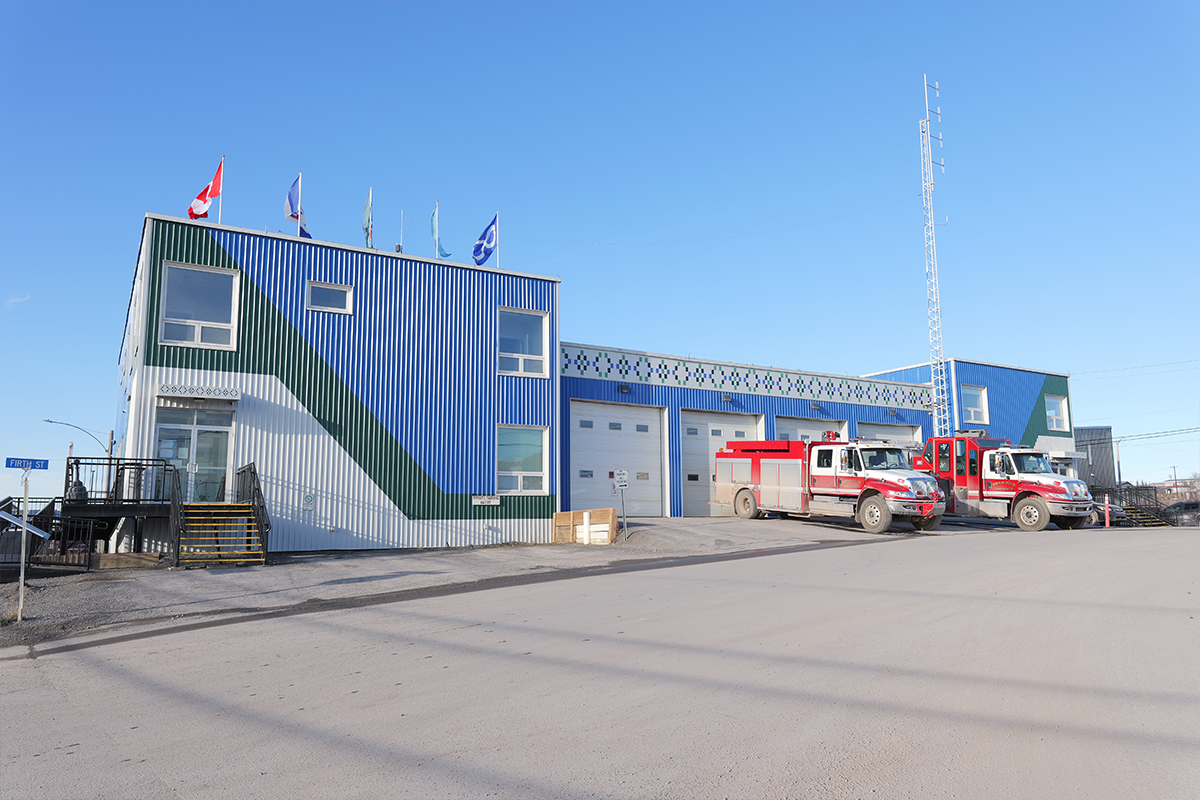
Town of Inuvik Municipal Building, featuring blue, green, and white exterior panels and flags along the roofline in Inuvik, Northwest Territories, Canada.
In the Canadian Western Arctic, a single business may hold years of records showing what a policy problem costs, how it developed and what might resolve it. The owner can explain the details. The evidence is available for examination.
Yet another questionnaire arrives.
Select your biggest barriers. Rank your concerns. Submit your answers. Wait for a report.
For a region with so few people and such limited administrative capacity, we should be making much better use of direct conversation. Before asking businesses to generate another round of information, the government should establish what evidence they already hold.
In a specialized local industry, there may be only a handful of operators. One company might maintain the service records, invoices, staffing history and project timelines needed to investigate a particular obstacle. Those records cannot describe the entire economy, but they can provide a detailed account of something happening within it.
That deserves a hearing.
Surveys have legitimate uses, including in small populations. Understanding public opinion or experiences across households requires more than calling familiar business owners. But a broad questionnaire is often poorly suited to explaining why a specific service cannot expand or where an administrative process breaks down.
A form might record “staffing” as a business’s greatest challenge. A conversation could establish that the underlying problem is unpredictable contracts, delayed payments or the cost of supervising a new employee. Each requires a different response.
Good policy depends on understanding those details.
Participation also takes time. An owner managing customers, payroll and a backlog may leave a survey unfinished. Someone who has repeatedly explained the same obstacle without seeing a response may have little enthusiasm for describing it again.
Their silence should never be treated as satisfaction.
A short conversation with someone who has read an earlier submission, understands the issue and can explain what decision is being considered offers a stronger reason to engage. It also allows follow-up questions—the questions that reveal what a predetermined list of answers missed.
Of course, direct access must come with scrutiny. A business owner has interests and may misunderstand the cause of a problem. Familiar voices should not crowd out customers, workers, new entrants or people outside established networks.
Ask for supporting records. Check the timeline. Seek other perspectives. Give the department or organization involved an opportunity to explain. Document what the evidence establishes and where uncertainty remains.
That is a practical, accountable inquiry. It should be routine.
Regional media can do the same. When a local operator brings forward a documented problem, there is an opportunity to investigate: examine the correspondence, reconstruct events and ask those responsible to respond. The result might confirm a failure, reveal a misunderstanding or uncover a wider issue. Each would improve public understanding.
The government could adopt a straightforward starting point for specialized business consultations: identify who holds relevant evidence, speak with them and accept existing records where they answer the question. Then explain what was learned and what action will follow.
The Western Arctic’s small population creates real difficulties. It also makes some knowledge unusually accessible. We should be using that advantage.
Businesses willing to explain an issue and provide evidence should encounter a clear route to being heard. They should not have to wait for a questionnaire that happens to ask the right question.
Before sending the next survey, pick up the phone.
Western Arctic Business Association
03 July 2026
Western Arctic Business Association
06 March 2026
Western Arctic Business Association
06 February 2026
Western Arctic Business Association
10 October 2026
The NWT measures spending, contracts and economic activity in considerable detail. What it does not measure nearly as consistently is whether all of that intervention is producing a stronger private …
04 September 2026
The Northwest Territories has programs that can help people start businesses. What is much less clear is whether those programs are designed to help successful businesses become substantially larger.
07 August 2026
Northern economic development has become very good at funding ideas. The harder question is whether those investments are actually producing durable companies.
03 July 2026
Arctic Business is brought to you by the Western Arctic Business Association (WABA)—a member-led organization that supports business growth across the region through partnerships, practical programming, and advocacy on the conditions Northern enterprises need to succeed.