Western Arctic Business Association
03 July 2026
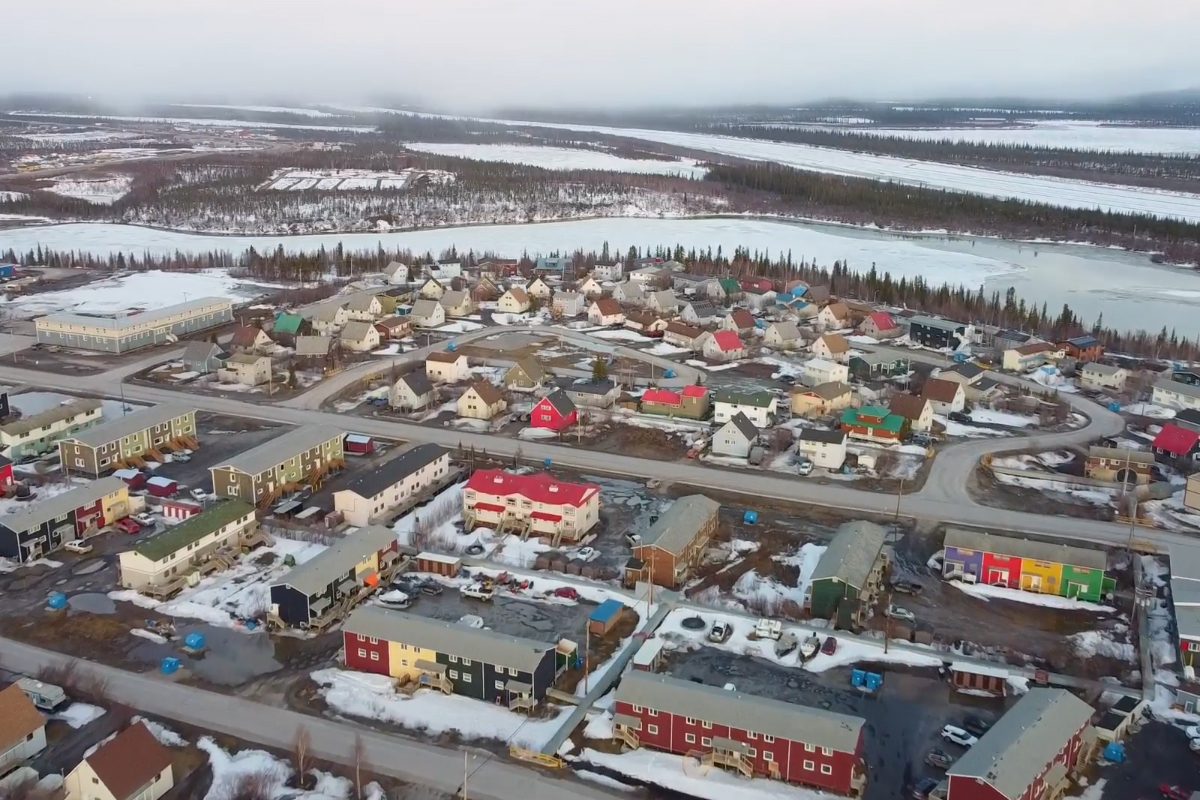
Aerial view of residential neighbourhoods, snow-covered streets, and a partially frozen river in Inuvik, Northwest Territories, Canada.
Ideas are not particularly scarce.
Every business owner has them. Every community has them. Governments receive them constantly through applications, proposals, feasibility studies, pilots and funding requests.
The Northwest Territories has built an economic-development system that is remarkably willing to help fund those ideas. SEED and other programs can support startups, market studies, equipment purchases, pilot projects, community initiatives and early-stage business development.
There is value in giving people the chance to try.
But funding an idea and building a company are two very different things.
A company is built through execution. It needs customers, cash flow, competent management, reliable employees, systems, capital, sales and the ability to survive mistakes. It has to deliver repeatedly, get paid, improve and eventually operate without depending on the next government contribution.
That is where economic development becomes difficult.
It is also where much of northern business policy becomes less interested.
Programs naturally gravitate toward beginnings because beginnings are easy to count. An application was approved. A contribution was issued. Equipment was purchased. A pilot was launched. A participant completed training.
Those are visible accomplishments.
Building a company takes longer and produces messier results.
Some businesses fail. Some remain small. Some take years before they become meaningful employers. Others discover that the original idea was wrong but find a different market and succeed anyway.
That process does not fit neatly into an annual program report.
Yet that is where the economic value is created.
The purpose of business-development funding should not simply be to ensure that people have access to money for ideas. It should be to increase the number of durable companies operating in the economy.
Those are not the same objective.
The distinction matters particularly in a small economy such as the Northwest Territories, where entrepreneurial talent, capital and labour are all limited. When those resources are scarce, we should care deeply about what happens after an idea receives funding.
A business that receives $20,000 and disappears two years later is a very different economic result from one that uses the same support to establish a market, employ people, reinvest and continue growing.
The original contribution may look identical in a government report.
The economic outcomes are not.
This is where SEED raises an important question.
Its broad mandate allows government to demonstrate that economic-development funding is available across communities and across many types of activity. That accessibility has political and social value.
But availability is not the same thing as effectiveness.
A program can successfully distribute funding without successfully building companies.
Northern businesses see the difference clearly because we live on the other side of the application process. The difficult part usually comes after the announcement and after the cheque.
It comes when the business has to find its second major customer.
It comes when payroll is due before an invoice gets paid.
It comes when a company has enough demand to hire but not enough capital to carry another employee for three months.
It comes when a contract requires equipment the business cannot finance.
It comes when the owner who could manage three employees suddenly has ten.
Those are the moments when an idea either becomes a company or remains an idea that once received funding.
Economic-development policy should be built around that reality.
That means following businesses long enough to know what happened to them. It means distinguishing between a promising proposal and a business that has demonstrated traction. It means being willing to concentrate more support behind companies that have proven they can execute rather than continually treating every new idea as the beginning of another economic-development success story.
It also means accepting that not every funded idea needs to become a large business.
Some programs exist for community development, self-employment or local resilience, and those can be worthwhile objectives on their own.
But when the objective is economic growth, the standard should be different.
We should be looking for businesses that survive, grow, hire, invest and eventually compete for customers beyond the programs that helped them get started.
That is the difference between entrepreneurship policy and company-building policy.
The North does not need fewer ideas.
It needs more of those ideas to survive the difficult transition into durable companies.
The question we should ask after every round of economic-development funding is therefore not simply how many projects we supported.
It is much simpler:
Did we fund another idea, or did we build another company?
Western Arctic Business Association
06 February 2026
Western Arctic Business Association
02 January 2026
The NWT measures spending, contracts and economic activity in considerable detail. What it does not measure nearly as consistently is whether all of that intervention is producing a stronger private …
04 September 2026
The Northwest Territories has programs that can help people start businesses. What is much less clear is whether those programs are designed to help successful businesses become substantially larger.
07 August 2026
Keeping a company busy today offers little assurance of what its owner can sell tomorrow. Northern economic development needs to account for that gap.
05 June 2026
Arctic Business is brought to you by the Western Arctic Business Association (WABA)—a member-led organization that supports business growth across the region through partnerships, practical programming, and advocacy on the conditions Northern enterprises need to succeed.