Western Arctic Business Association
10 November 2026
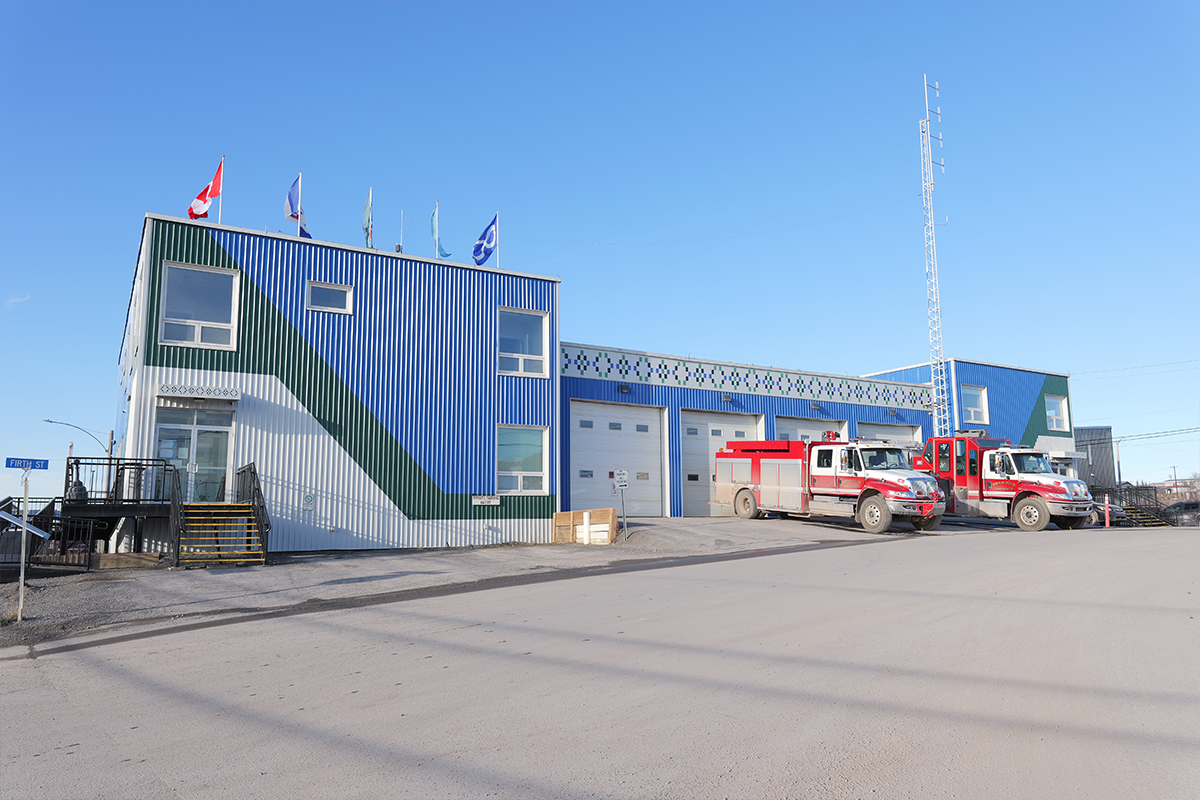
View of the Town of Inuvik Municipal Building in Inuvik, Northwest Territories, Canada, serving as the centre of local government and municipal administration for the community.
The North has spent years treating overload as capability.
One person handles procurement, technology, communications, partnerships, staffing and project delivery. Another sits on several boards, manages a department and is still expected to understand every technical detail passing across the desk.
This is usually described as wearing many hats.
More often, it means doing several jobs without enough time, support or specialist knowledge to do any of them properly.
The arrangement is understandable. Northern organizations are small. Labour pools are thin. Budgets do not allow for a full roster of experts. People step into gaps because the work has to be done.
The trouble starts when the gap disappears on paper.
Once someone is assigned responsibility for a function, everyone begins acting as though the person also possesses the expertise behind it. The title changes. The workload grows. The knowledge does not automatically follow.
That confusion is now built into too many Northern institutions.
A capable administrator can manage a technology project without being able to judge cybersecurity risk. A senior executive can approve a communications plan without understanding audience strategy. A board can authorize infrastructure spending without being qualified to test engineering assumptions.
There is no shame in any of that. No serious organization should expect one person to master every field.
Yet Northern workplaces often do.
Senior people are expected to answer with confidence. Boards want reassurance. Funders want certainty. Staff want direction. Admitting that a question falls outside one’s field can feel like an admission of incompetence.
So people answer anyway.
That is how organizations end up defending decisions that were never properly tested.
Confidence is easy to reward. It is visible in meetings, presentations and reports. Good judgment is harder to see because it often sounds less impressive. It says the problem needs more review. It asks for another opinion. It slows the process before money is committed.
In an overloaded organization, slowing down can look like failure.
The pressure is always to keep moving.
Once a project has been approved, announced or funded, that pressure becomes stronger. A specialist who arrives later and finds a serious flaw is not merely raising a technical concern. The specialist is putting previous decisions, reputations and budgets at risk.
By then, the organization has reasons to resist the advice.
The expert is called too cautious. The recommendation is described as impractical. The cost of correction becomes an argument for staying the course, even when staying the course will cost more.
The answer is not to put a specialist on every payroll. Most Northern organizations cannot afford that, and many do not need it.
They need dependable access to expertise before decisions become difficult to reverse.
That can mean several organizations sharing a technical adviser. It can mean retaining specialists for scheduled reviews rather than emergency repairs. It can mean requiring an independent opinion before major systems are purchased, tenders are released or public commitments are made.
It also means giving generalists a more realistic job.
Their role should be to understand the organization, identify risks, coordinate the right people and apply specialist advice to local conditions. They should not be expected to personally replace every profession the organization cannot afford to employ.
Boards and funders have a role as well. They should ask whether the right expertise has been involved, not simply whether the person in charge sounds confident. Project budgets should include room for technical review, implementation support and training rather than treating those costs as optional extras.
Outside specialists, in turn, should be expected to leave more than a report. They should explain their reasoning, work with local staff and build enough internal understanding that the organization is better prepared the next time.
The goal is not to transfer control away from the North. It is to make Northern control more informed. Leaders should still lead. Boards should still decide. Local knowledge should still shape the work. But technical questions should be tested by people who understand them.
The strongest Northern professionals are not those who claim to know everything. They are the ones who recognize where their knowledge ends, bring in the right people and use that expertise without giving up local authority.
The North has enough people carrying five jobs.
It should stop pretending they also carry five professions.
Generalists keep the North running but problems begin when broad responsibility is mistaken for technical competence.
Western Arctic Business Association
10 October 2026
Western Arctic Business Association
12 March 2026
Western Arctic Business Association
28 February 2026
PM Mark Carney has announced an estimated $35 billion for defence and Northern infrastructure. The headline number matters—but what will decide the outcome is who writes the rules.
12 March 2026
DND’s April 21, 2026 town hall in Inuvik is the right start. But if Ottawa wants “capacity in the North,” procurement has to build local suppliers—not just local disruption.
28 February 2026
RDII is a welcome signal for the Western Arctic, but Ottawa is still trying to buy defence-ready capacity from a market it never built. Without redesign for market reality, it …
25 January 2026
Arctic Business is brought to you by the Western Arctic Business Association (WABA)—a member-led organization that supports business growth across the region through partnerships, practical programming, and advocacy on the conditions Northern enterprises need to succeed.