Western Arctic Business Association
28 April 2026
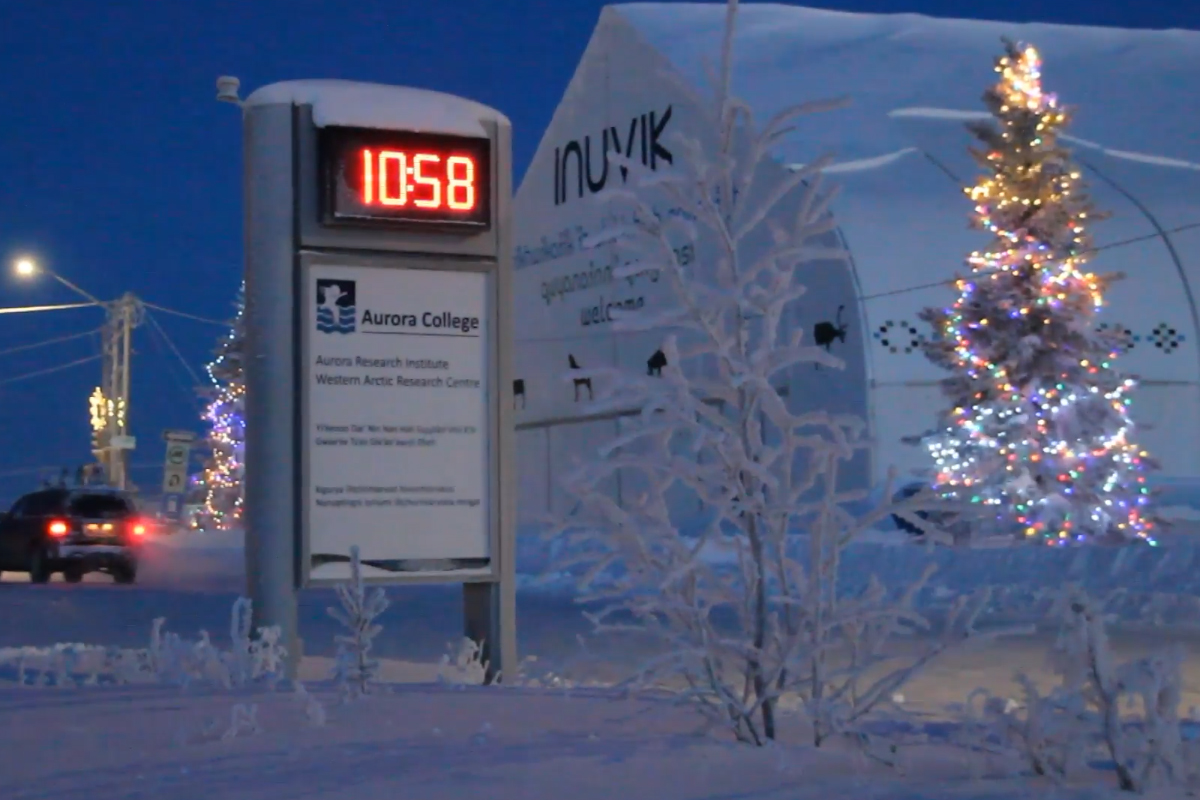
Aurora College signage along a snow-covered street in Inuvik, Northwest Territories, Canada.
When an experienced employee leaves a small northern business, the owner can spend months recruiting, training and covering the work personally. Eventually, someone arrives. The vacancy is filled. Considerable money and effort have been spent simply recovering the capacity the business already had.
Now consider what happens as experienced workers retire while younger, qualified residents pursue opportunities elsewhere. Expanding a business becomes increasingly difficult when keeping it operating already requires a continuous rebuilding effort.
This is the demographic challenge that needs a much larger place in discussions about the Western Arctic’s economic future.
Across much of the world, declining birth rates and population aging are changing the workforce. More than half of countries and areas have fertility below replacement level. Canada’s 2021 census found that more than one in five working-age people were aged 55 to 64—a record proportion approaching retirement.
Northern employers recruit within that wider market. The cities competing for our nurses, technicians, tradespeople and managers face their own replacement needs. We cannot assume there will always be someone available elsewhere who is willing to move north.
The Western Arctic’s situation requires care in how we describe it. The Northwest Territories remains younger than Canada overall, and the Beaufort Delta has a substantial population of children. Yet the NWT’s population aged 60 and over increased by 58.3% between 2015 and 2025, compared with 35.8% nationally. A younger population can still be aging quickly.
Nor does a large population of children guarantee a future workforce. That depends on whether young residents can obtain training, gain experience and establish a life here.
Statistics Canada provides a revealing measure of the retention challenge. Among the 2010–2017 graduating cohorts it studied, 51% of homegrown NWT postsecondary graduates worked outside the territory two years after graduation. Recruitment from elsewhere more than offset those departures, producing a territorial net gain in young skilled workers. But attracting talent and retaining homegrown talent are different achievements, and territorial totals cannot tell us whether particular communities have the people they need.
The business implications are substantial. The NWT’s 2023–2032 labour-market outlook projected approximately 13,100 openings, primarily arising from outmigration, retirement and deaths. Much of the anticipated hiring represents replacement rather than expansion.
For a small firm, losing one experienced person can mean losing its ability to supervise apprentices, accept another contract or maintain a service. When an owner retires without a successor, a viable business can disappear even though its customers still need it.
That is why demographic policy belongs inside economic development policy. Funding another business launch achieves little if existing employers cannot retain staff or transfer their knowledge to the next generation.
Higher wages alone will not settle the problem. People make decisions as households. They need suitable housing, employment for a partner, childcare and confidence that a position can become a lasting career. The Beaufort Delta’s regional economic development report documented accounts of young people leaving for more affordable housing and prospective incoming families reconsidering relocation because accommodation was difficult to obtain.
Predictability matters too. Where a position depends on annual program renewals or a business relies on uncertain purchasing decisions, employers have less confidence to offer permanent work. Families considering a mortgage or a move must weigh that uncertainty against opportunities elsewhere.
Government should examine how its own decisions affect that calculation. A succession of short projects may keep people occupied without giving them a dependable future.
The response must connect training to actual employment. Employers need support for the time experienced workers spend teaching, supervising and transferring responsibility. Retiring workers should have practical opportunities to mentor successors. Prospective owners need help purchasing and operating established businesses before those businesses close.
We also need to measure what happens after recruitment and training. Whether someone remains after two, five or ten years tells us more about durable capacity than the number of placements announced.
The Western Arctic has young people with ability, experienced residents with knowledge to share, and newcomers willing to contribute. Building an economy around them requires a credible path from education to skilled work, from skilled work to a lasting career, and from employment to ownership.
Otherwise, we will spend another decade filling vacancies and announcing opportunities while business owners struggle to keep the same doors open.
Western Arctic Business Association
15 February 2026
Western Arctic Business Association
28 March 2026
Western Arctic Business Association
19 May 2026
Government decisions can shape the future of a Northern business for years. In the Western Arctic, remarkably few votes can determine who gets to make those decisions.
25 February 2026
Customers and capable owners are only part of the equation. Northern business support must address the conditions that keep promising companies from becoming sustainable.
15 February 2026
Small businesses are expected to drive northern growth while competing for workers against publicly funded employers with deeper pockets and better benefits.
28 March 2026
Arctic Business is brought to you by the Western Arctic Business Association (WABA)—a member-led organization that supports business growth across the region through partnerships, practical programming, and advocacy on the conditions Northern enterprises need to succeed.