Western Arctic Business Association
19 May 2026
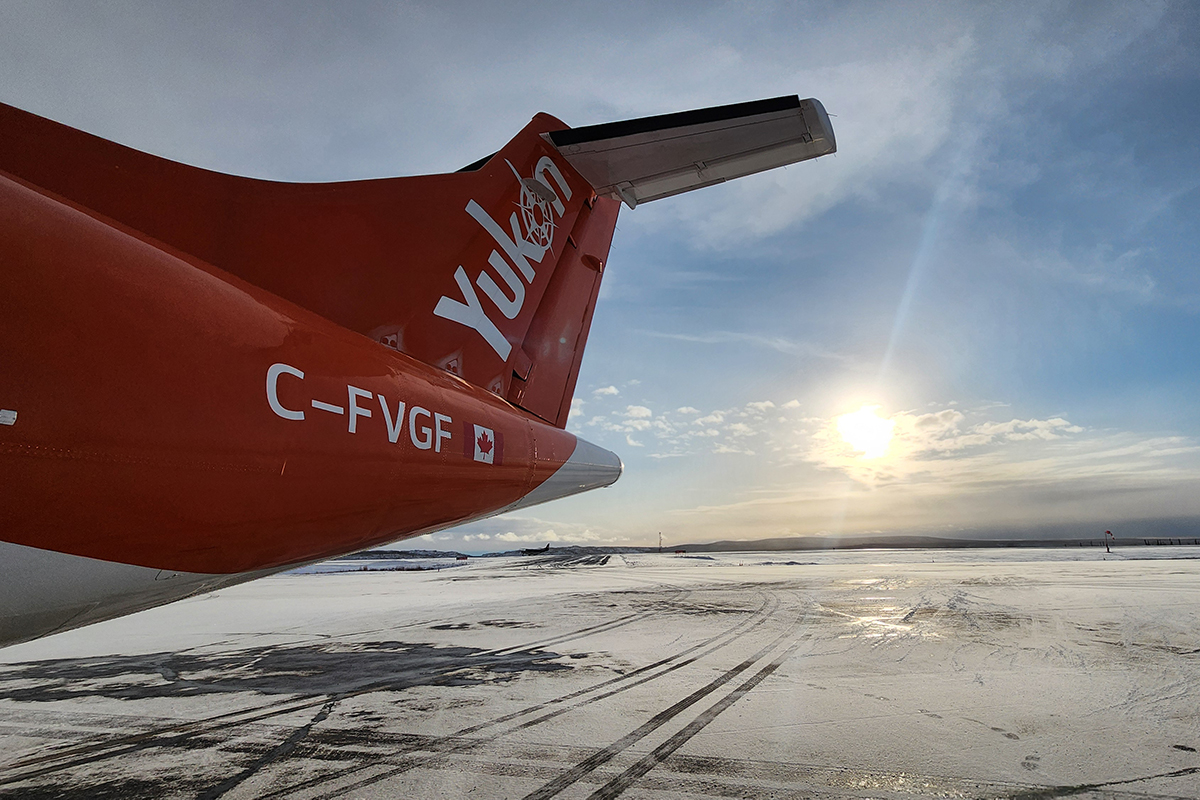
Civilian aircraft on a snow-covered airport apron in Inuvik, Northwest Territories, Canada.
A business owner delivering services, supervising employees, and handling payroll is also expected to find procurement notices, prepare proposals, arrange financing, and navigate security requirements. A large corporation assigns those responsibilities to departments.
Both may technically have access to the same opportunity. Their ability to pursue it is very different.
As Canada expands its defence presence in the Western Arctic, that difference deserves considerably more attention. Public spending can strengthen the region’s private sector. But spending money in the North does not automatically build businesses that can grow here.
The structure of upcoming procurement makes the concern concrete. Defence Construction Canada’s advance notice for NORAD infrastructure in Inuvik and Yellowknife described one Modified Design-Build contract per site, with an estimated value that could exceed $5 billion at each location. Those were preliminary estimates, subject to revision, but the scale of the proposed packaging is unmistakable.
For most independent local businesses, the realistic opportunity within such a structure is subcontracting. That can be valuable. It can also leave the larger contractor controlling access to the customer, the terms of participation, and the next opportunity.
The question is what those arrangements leave behind: experienced employees, stronger management, equipment, and the ability to win future work—or simply a completed invoice.
Northern procurement policies have long wrestled with this distinction. The GNWT’s 2021 independent procurement review identified unclear eligibility definitions and the potential for shell companies, complex ownership arrangements, and nominal business addresses to create the appearance of qualification. These were warnings about weaknesses in the system, rather than proof of wrongdoing by particular companies.
Outside ownership alone is an inadequate test of local benefit. The GNWT’s October 2023 Business Incentive Policy allows a business to qualify through northern employment and management, subject to other conditions. A company headquartered elsewhere can make a substantial, lasting contribution here. The policy question is whether that contribution is delivered and verified.
BIP governs territorial procurement, however. Federal defence opportunities require their own preparation. A local preference in one system cannot compensate for being unprepared to enter another.
Timing matters. Defence Construction Canada advises firms requiring security clearance to begin the sponsorship process when an advance procurement notice appears. Its guidance warns that waiting until the tender is published will generally be too late to meet sponsorship requirements. Businesses also bear costs associated with preparing documents and meeting applicable security measures.
For a small firm, readiness therefore requires investment before a contract exists. Someone must do the work, and the business must carry the cost.
There are encouraging responses. CanNor announced up to $1.5 million over three years for the Nihtat Operations, Readiness & Training Hub in Inuvik, including bid preparation, procurement documentation, cybersecurity readiness, and skills training for local Gwich’in suppliers and workers. That is practical support directed at the right problem. Its progress should inform wider efforts to prepare the region’s businesses.
Government should now connect that preparation to purchasing decisions. Publish foreseeable work packages early. Make requirements understandable. Fund the staff time and specialist assistance needed to qualify. Where practical, structure opportunities so capable smaller firms can compete directly.
Major contractors should face clear, measurable commitments for resident employment, local purchasing, apprenticeships, and skills development. Reporting should show what was delivered, including which benefits reached local subcontractors.
Outside expertise and capital will be necessary. The region should negotiate partnerships that help northern firms take on greater responsibility over time.
The test of this defence investment will extend well beyond the facilities it builds. It should also be judged by whether northern businesses emerge able to employ more people, deliver more complex work, and compete for the next contract.
That outcome must be designed into procurement now. Once the contracts are awarded, much of the opportunity to shape it will already be gone.
Western Arctic Business Association
15 February 2026
Western Arctic Business Association
28 March 2026
Western Arctic Business Association
28 April 2026
Western Arctic Business Association
26 June 2026
Government decisions can shape the future of a Northern business for years. In the Western Arctic, remarkably few votes can determine who gets to make those decisions.
25 February 2026
Customers and capable owners are only part of the equation. Northern business support must address the conditions that keep promising companies from becoming sustainable.
15 February 2026
Small businesses are expected to drive northern growth while competing for workers against publicly funded employers with deeper pockets and better benefits.
28 March 2026
Arctic Business is brought to you by the Western Arctic Business Association (WABA)—a member-led organization that supports business growth across the region through partnerships, practical programming, and advocacy on the conditions Northern enterprises need to succeed.