Western Arctic Business Association
15 February 2026
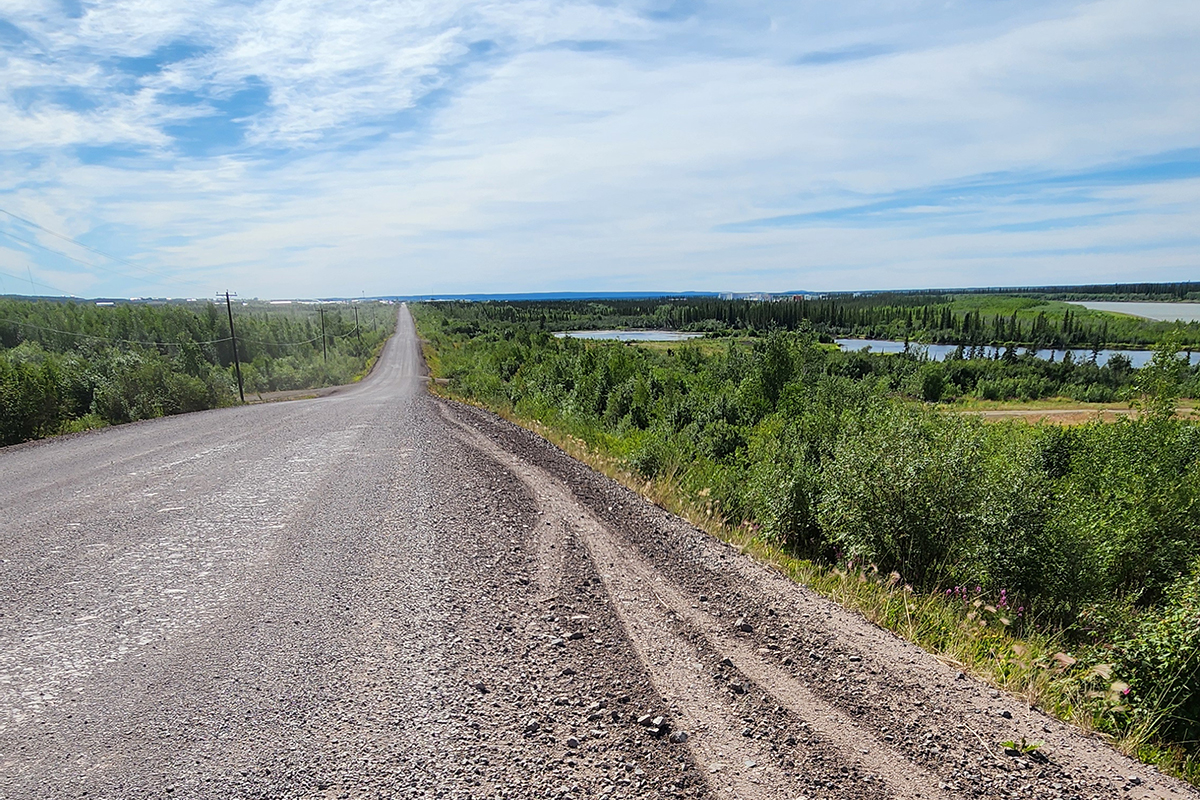
Gravel road extending through a wooded landscape with distant waterways in the Canadian Western Arctic, Northwest Territories, Canada.
A business can have satisfied customers, provide a needed service and face almost no direct competition—and still struggle to survive in the Arctic.
That should give economic development decision-makers pause. When capable businesses cannot establish dependable operations under those circumstances, encouraging another entrepreneur to launch deserves more scrutiny.
The Western Arctic does not suffer from a shortage of ideas. Its communities have needs that are readily apparent to the people living and working in them. The difficulty is building an operation that can meet those needs consistently, at a price customers can pay, while earning enough to continue.
An operating model that works elsewhere can become precarious here. A small customer base must carry high overhead. Recruiting an employee may also require finding housing. Serving another community adds travel costs before it adds revenue. A delayed shipment can interrupt delivery while wages and rent continue.
Having few competitors does not remove any of those costs. Sometimes, it helps explain why so few providers have entered the market.
Northern businesses must also navigate decisions that can alter demand abruptly.
Where government and publicly funded institutions are major customers, a postponed contract, changed program or decision to bring a service in-house can remove a substantial share of a company’s revenue. The underlying need may remain. The local provider may have performed well. But its ability to earn income has changed.
Short contracts and uncertain renewals compound the problem. A purchaser may need a service year after year while offering the supplier too little certainty to retain staff or invest in better delivery. Slow payment adds another burden: the business finances the work while waiting for its customer to pay.
Government intervention can also introduce providers whose funding allows them to charge less than the full cost of delivery. An established business then has to compete against prices it cannot sustainably match.
These are conditions that public institutions help create. Economic development cannot be assessed separately from them.
Neither can fairness in decision-making. Favouritism, wherever it occurs, weakens the connection between business performance and commercial opportunity. Opaque decisions leave owners unable to understand why they lost work or what they could improve. Published criteria, documented reasons and meaningful review are basic conditions for a market in which businesses can invest with confidence.
Against these difficulties, support for a pilot, a launch or a new purchase can address only part of the problem.
A demonstration establishes that something can work. A sustainable operation establishes that it can be delivered repeatedly, with paid staff, maintained equipment and enough margin to withstand disruption.
Between those stages are businesses whose owners can see exactly what is missing. They have customers. They have revenue. They have learned which services sell and what delivery actually costs. But they cannot yet afford the additional person, administrative capacity or working capital that would allow the operation to become stable.
That experience is valuable evidence. It should carry substantial weight in funding decisions.
Instead, an owner can find themselves explaining a new initiative when their most pressing need is help making existing work sustainable. The proposal becomes more elaborate while the operating constraint remains.
Practical assistance should begin with that constraint.
Would training another employee allow the company to fulfil more orders? Would shared administrative support free the owner to deliver paid work? Would working capital against credible contracts prevent avoidable interruptions? Would a longer purchasing commitment make hiring financially possible?
Support should have clear objectives and a credible path toward covering its continuing costs. It should also recognize that some barriers require changes in purchasing or policy, rather than another grant.
Not every business can become viable. But a company with demonstrated demand and a specific, solvable operating problem deserves serious attention before we celebrate the next launch.
Owners should not have to sustain essential services indefinitely through unpaid hours, deferred wages and personal exhaustion. Those sacrifices can conceal how fragile an operation remains.
The purpose of economic development is to leave the region with businesses capable of delivering, employing and growing. A funded beginning is one step toward that result.
The harder—and more consequential—work is helping a promising business become one that can last.
Western Arctic Business Association
25 February 2026
Western Arctic Business Association
28 March 2026
Western Arctic Business Association
28 April 2026
Government decisions can shape the future of a Northern business for years. In the Western Arctic, remarkably few votes can determine who gets to make those decisions.
25 February 2026
Small businesses are expected to drive northern growth while competing for workers against publicly funded employers with deeper pockets and better benefits.
28 March 2026
Retirement and the loss of homegrown talent threaten business continuity. Economic development must give people a credible future in the region.
28 April 2026
Arctic Business is brought to you by the Western Arctic Business Association (WABA)—a member-led organization that supports business growth across the region through partnerships, practical programming, and advocacy on the conditions Northern enterprises need to succeed.