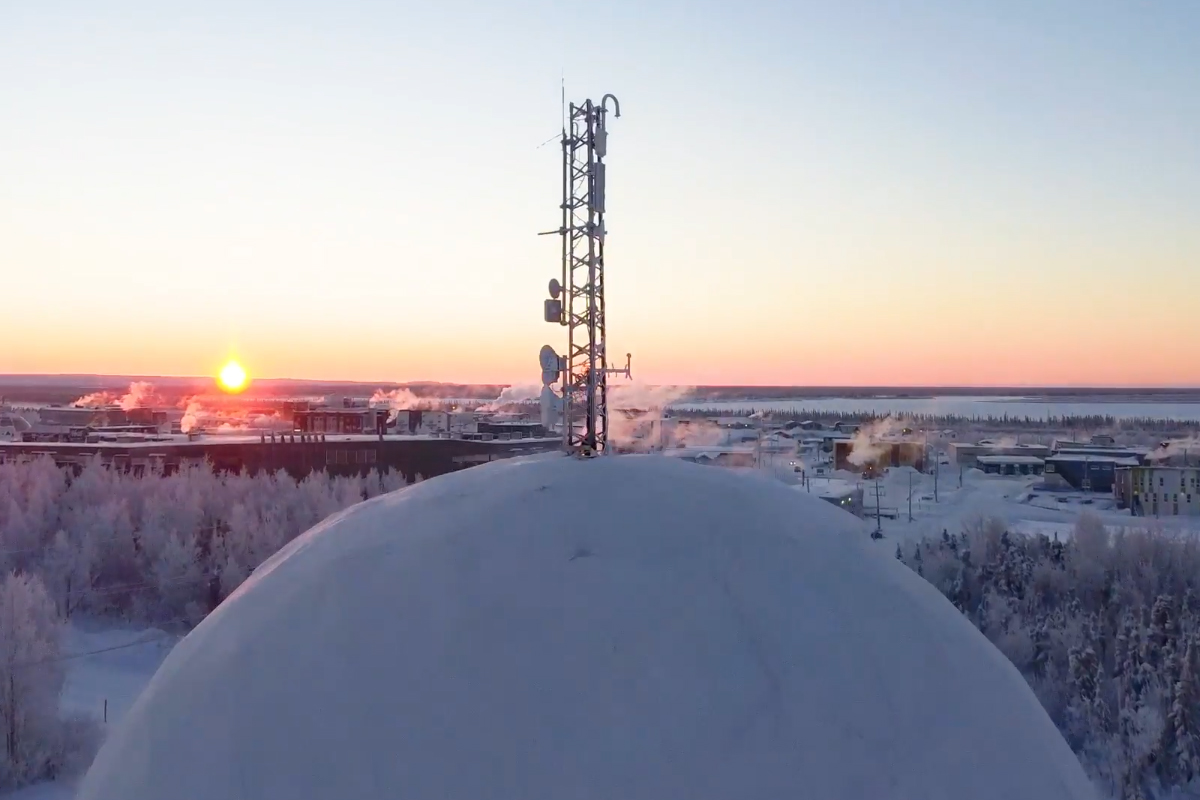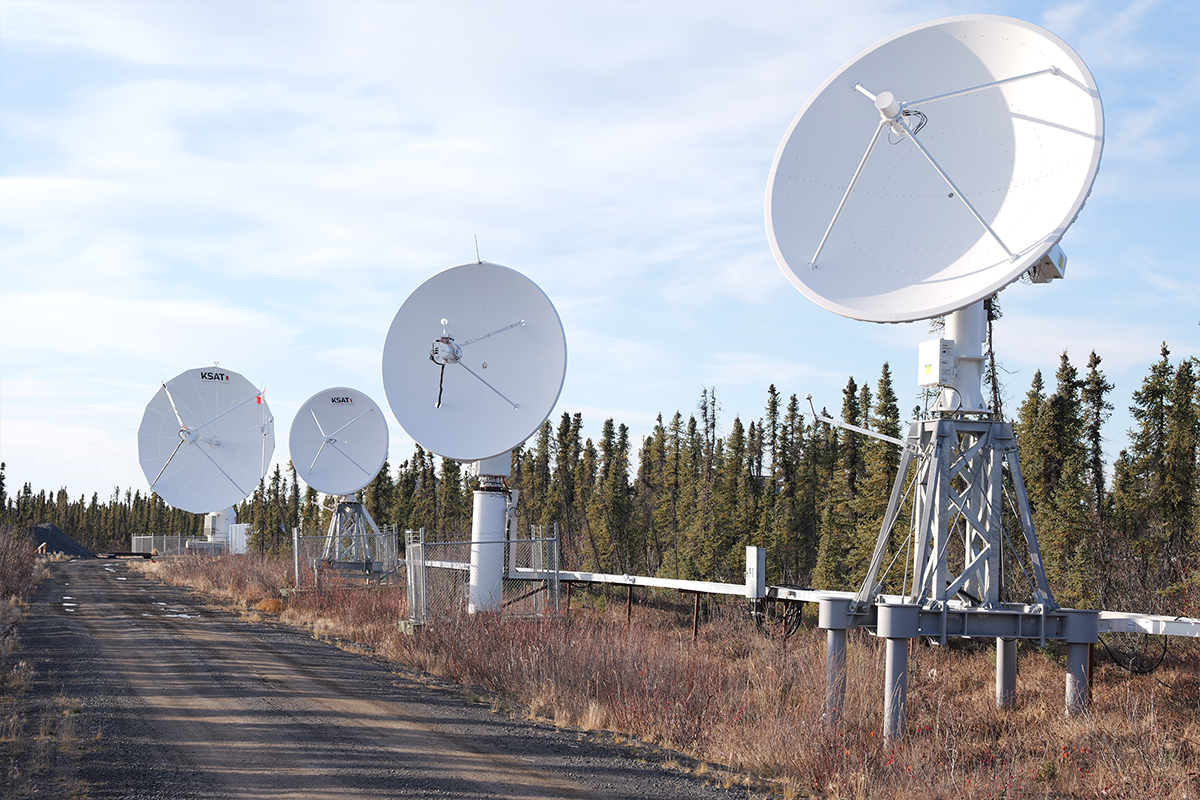
Satellite communication antennas at the Inuvik Satellite Station Facility, surrounded by snow-covered grounds in Inuvik, Northwest Territories, Canada.
The Canadian Western Arctic needs better infrastructure, more productive businesses and modern public services. Technology can help deliver all three. But funding new capabilities without funding their protection leaves the investment incomplete—and can leave the organization receiving it more vulnerable.
Security belongs in the original project budget and the continuing operating plan. It should influence what gets purchased, how it is implemented and whether the owner has the capacity to maintain it.
That applies as much to an AI program as to a connected building. A facility may introduce remote access to heating and power equipment. An AI service may process internal documents. A membership portal may bring confidential records online. Each changes what an organization must protect, who can access it and the consequences of a failure.
Those responsibilities begin when the technology is introduced. They cannot wait for another funding application.
The weakness in a project budget can be easy to overlook. Equipment, software and installation are identifiable purchases. Continuing security work is less visible: managing accounts, maintaining systems, reviewing access, training employees and testing recovery. Unless those responsibilities are explicitly assigned and funded, they fall to whoever is available.
For a small northern organization, that may be an employee already carrying several unrelated duties. A project can therefore meet its launch requirements while leaving its operator without the resources to keep it secure.
From a technology perspective, that is an incomplete handover.
A complete project should leave its owner able to control access, understand how information is handled, maintain the system and recover essential operations. With AI, that includes rules for confidential information and appropriate human review. With connected infrastructure, it includes protected remote access and safe operation when communications fail.
The requirements will differ. A public information tool does not need the same protections as a system controlling essential equipment. Making that distinction requires an assessment before purchasing decisions are locked in.
Northern conditions make recovery planning especially important. Replacement equipment may need to be shipped. Specialist support may require travel. A communications failure may remove the remote access needed to diagnose another problem. Plans must account for those realities before an organization becomes dependent on the service.
Funding agencies and project owners should require security costs to appear explicitly in implementation budgets, with a credible plan for continuing support. Responsibility should be assigned, staff prepared and recovery procedures tested before handover.
This is how modernization delivers lasting value. Productivity gains can disappear quickly if an organization loses access to its records, exposes confidential information or cannot operate essential equipment.
The Western Arctic should pursue better infrastructure, AI and digital services with ambition. That ambition needs budgets that cover the full responsibility being created.
Security is part of the price of modernization. Leaving it unfunded passes the cost and risk to northern organizations long after the project has been declared a success.
Western Arctic Business Association
04 September 2026
Western Arctic Business Association
05 June 2026
Inuvik Web Services - Cloud Provider in Inuvik
16 January 2026
The North can make immediate gains in digital safety by addressing known weaknesses in the technology its businesses and communities already depend on.
03 April 2026
Northern cloud providers aren’t a smaller version of southern platforms—they’re built around continuity, turnover, and community operating realities.
16 January 2026
In the Arctic, the limiting factor is often not capability—it’s discoverability and verification, and that friction quietly distorts how the region functions.
25 December 2025
Arctic Business is brought to you by the Western Arctic Business Association (WABA)—a member-led organization that supports business growth across the region through partnerships, practical programming, and advocacy on the conditions Northern enterprises need to succeed.