Western Arctic Business Association
16 December 2025

Tom Zubko, owner of New North Networks, photographed in Inuvik, Northwest Territories, Canada, reflecting the role of locally owned telecommunications in supporting Northern communities.
There’s a moment in northern business when the map stops being scenery and becomes strategy. For Tom Zubko, that moment comes in two forms: bandwidth and latitude.
Bandwidth, because a remote community can’t compete—or even function normally—if it can’t connect to the rest of the country at modern speeds. Latitude, because being at 68° North is not just a fact of geography; it’s a commercial advantage in an economy where satellites circle the poles and data has to come down somewhere.
Zubko has spent decades building around those realities. He founded a hometown telecommunications provider that locals recognize as a piece of daily infrastructure. He helped push Inuvik into the commercial ground-station conversation by backing a private-sector model that could move faster than government sites and standards allowed. And he has carried those experiences into national policy conversations, arguing that the North’s biggest barrier is not a shortage of ideas—but a shortage of consistent decisions.
Zubko is a lifelong resident of Inuvik, but his story begins before Inuvik itself did. He was born in Aklavik, in an era before the planned town of Inuvik was conceived and built—a detail that matters because it frames the arc of his career: he didn’t move north for an opportunity. He lived through the North’s evolution, and built businesses that had to survive what the region actually is, not what outsiders imagine it should be.
His family’s roots run deep in Arctic development. His father, Michael “Mike” Zubko, was a pioneering northern aviator, later inducted into Canada’s Aviation Hall of Fame. Mike Zubko founded Aklavik Flying Service in 1947, the first Class IV charter service operating north of the Arctic Circle. Tom worked as a pilot in his father’s operation—an early apprenticeship in the basic northern equation: distance is expensive, logistics are destiny, and reliability is a competitive edge.
Zubko eventually stepped into public office and was elected Mayor of Inuvik. In 1995, he officiated the renaming of the local airport as the Inuvik Mike Zubko Airport, honoring his father’s role in northern aviation history. It’s a ceremonial detail, but it also points to the kind of leadership Inuvik tends to reward: people who build the connective tissue that makes a remote economy possible.
In the South, “communications” can read as a consumer industry. In the Beaufort Delta, it functions like a utility: the invisible layer that determines whether schools can deliver coursework, whether health services can consult specialists, whether businesses can process payments and operate cloud tools, and whether families can manage life across long distances.
Zubko founded New North Networks (NNN) in 1990 with an explicit mission to bridge the digital divide across the Northwest Territories. In a market dominated by outside providers and southern decision-making, NNN set out to be local by design—based in Inuvik, staffed locally, and accountable to the community in a way a distant headquarters never fully can be.
NNN’s headquarters—at 74 Firth Street—isn’t subtle. A geodesic structure known widely as “The Dome,” it has become a kind of shorthand for the company’s presence: visible, permanent, and unmistakably local.
Over time, NNN became Inuvik’s only locally owned high-speed internet and digital cable television provider, and it built its reputation on being willing to do what remote markets demand: improvise, adapt, and invest ahead of certainty.
NNN pioneered the introduction of cable television services to Inuvik. The company also says it was the first in Canada to introduce cable internet service via satellite to the Beaufort Delta—an example of northern innovation that tends to look obvious only in hindsight. In much of Canada, fibre and terrestrial networks were the default path. In the Western Arctic, the problem was not customer demand; it was getting enough capacity into the region in the first place.
Zubko also facilitated the introduction of cellular phone service to Inuvik through a partnership with Ice Wireless—another instance where northern progress often arrives through practical alliances rather than neat, single-provider expansion plans.
Telecom companies everywhere like to describe themselves as “connecting communities.” In Inuvik, New North’s connection is literal—and it spills into community life in ways that don’t fit cleanly into a billable-services model.
NNN established and hosts the Community Bingo Channel (CH22), which has raised hundreds of thousands of dollars for local non-profits and community initiatives. That isn’t marketing fluff; it’s an example of what a genuinely local company can become in a small northern market. When the audience is your neighbour, the line between “business” and “community infrastructure” is thinner than it looks in the South.
The company also provides crucial radio communications services, maintaining a large local inventory of equipment in Inuvik and supporting VHF radio solutions used for safety and shipping in the transportation sector. In the North, this is not a niche add-on. It’s part of the region’s operational backbone—especially in seasons and on routes where connectivity can’t be assumed.
NNN’s service evolution has tracked the region’s changing needs. As demand grew and the Mackenzie Valley Fibre Link enabled larger upgrades, NNN expanded what it could offer, including faster tiers—up to 200 Mbps download speed—bringing more of the modern digital economy within reach of local households and businesses.
And when usage patterns changed—especially during the period when people were confined at home and data caps became a practical barrier—NNN implemented permanent unlimited internet plans for heavy users. It was a business decision, but it also reflects Zubko’s basic operating philosophy: in a remote economy, systems have to match reality, not theory.
If New North Networks is Zubko’s best-known contribution, his most strategically consequential work may be what came next: helping Inuvik become a serious node in the global satellite-data economy.
The logic starts with geography. At 68° North, Inuvik is positioned to track polar-orbiting satellites on nearly every pass, maximizing downlink opportunities. That’s not just a technical detail—it’s the commercial proposition. Earth observation companies need timely data; ground stations need clear access and high-capacity connections; and the economics improve dramatically when you can capture more passes and move data quickly.
Zubko is recognized as one of the “masterminds” behind Inuvik’s emerging private commercial space industry, and he approached it with a familiar northern instinct: build the thing that works, even if the official pathway is too slow or too expensive.
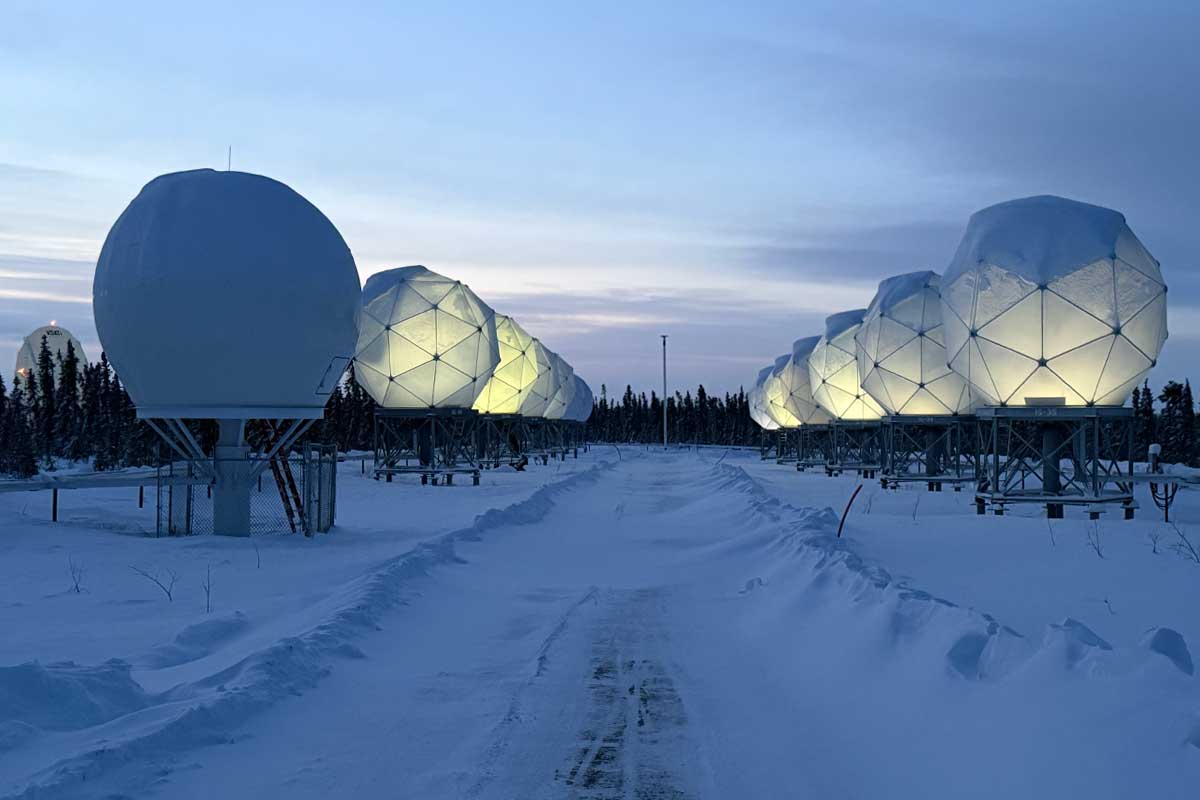
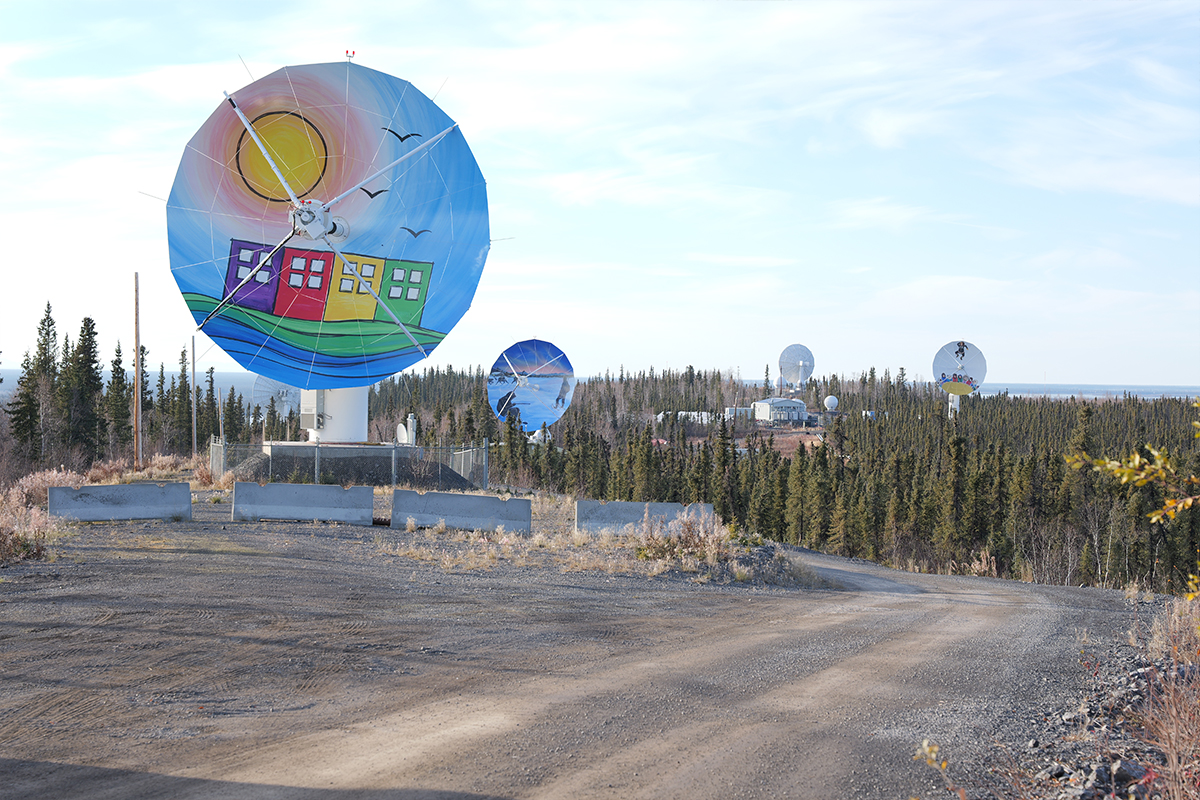
The New North Space Park—Zubko’s commercial ground-station venture—emerged as an agile private-sector response to the costs and rigid standards faced by commercial operators trying to build at the government-run Inuvik Satellite Station Facility. When international operators found federal requirements prohibitively expensive, Zubko advanced a different model: secure land and build privately, with commercial economics and timelines that matched the market.
That approach helped unlock major international investment. Norway’s Kongsberg Satellite Services (KSAT) invested roughly $10 million into the privately owned site, and Planet Labs later invested in additional dishes. Beyond the capital itself, the bigger outcome was proof: high-tech, export-oriented operations can be commercially viable in the Western Arctic when the enabling infrastructure is present and the rules are workable.
Just as important, the model anchored local work into the sector. New North Networks holds contracts for ongoing maintenance and services for international partners at the site, tying technical employment and operational capability to Inuvik rather than outsourcing it entirely.
The project’s expansion vision—under the New North Space Park name—signals a longer-term bet: that Inuvik’s competitive advantage is not only its latitude, but its ability to pair that latitude with reliable terrestrial connectivity and on-the-ground expertise.
Zubko’s business story doesn’t separate cleanly from policy, because in the North, policy is not background noise. It’s a structural input: it determines timelines, risk, and whether private investors stay in the room.
Zubko has testified before the House of Commons Standing Committee on Indigenous and Northern Affairs (INAN), where he argued for an enduring, consistent Arctic policy—one that governments improve over time rather than abandoning with each political cycle. He has also spoken critically about the North’s repeated boom-bust development pattern, noting he has lived through three major cycles tied to oil and gas expectations in the region.
He has been blunt about bureaucratic processes that, in his view, over-reward consultation and under-reward decisions—describing a “per diem economy” where hearings and studies become the work, rather than the path to work. He has also emphasized the multiplier effect of infrastructure investment, citing the idea that every $1 invested in northern transportation and energy infrastructure can generate $11 in economic benefits—not as a slogan, but as a rationale for treating infrastructure as the base layer of sovereignty, quality of life, and private-sector viability.
Some of his positions are intentionally provocative—such as his concerns about advocacy groups and funding streams that may not align with northern or Canadian interests. But the through-line remains consistent and businesslike: the North doesn’t need a new “vision” every few years. It needs stable rules, adequate infrastructure, and a development environment where taking calculated risks is possible.
Arctic entrepreneurship is often romanticized in southern narratives—either as rugged self-reliance or as a story of hardship and heroics. Zubko’s career offers a more useful lens for northern business readers: the operator’s lens.
He has built a company that functions as a local telecom utility, not just a vendor. He helped create a private-sector pathway into the satellite ground-station economy when the official pathway was too rigid for market timelines. And he has used both experiences to argue for something rarely glamorous and always necessary: consistency.
In the South, continuity is assumed. In the North, it’s built—one system at a time, one workaround at a time, until the workaround becomes the standard.
That may be Zubko’s most enduring business contribution to Inuvik: not simply a set of services, but a model for how a northern economy becomes less dependent on distant decisions—by owning more of the infrastructure that keeps a community functioning, and by treating geography not as a handicap, but as leverage.
Webhorse Technologies - IT Services in Inuvik
28 December 2025
New North Space Park - Arctic Satellite Ground Station Hub in Inuvik
22 December 2025
Western Arctic Business Association
01 September 2025
Western Arctic Business Association
29 December 2025
Western Arctic Business Association
14 December 2025
Western Arctic Business Association
12 November 2025
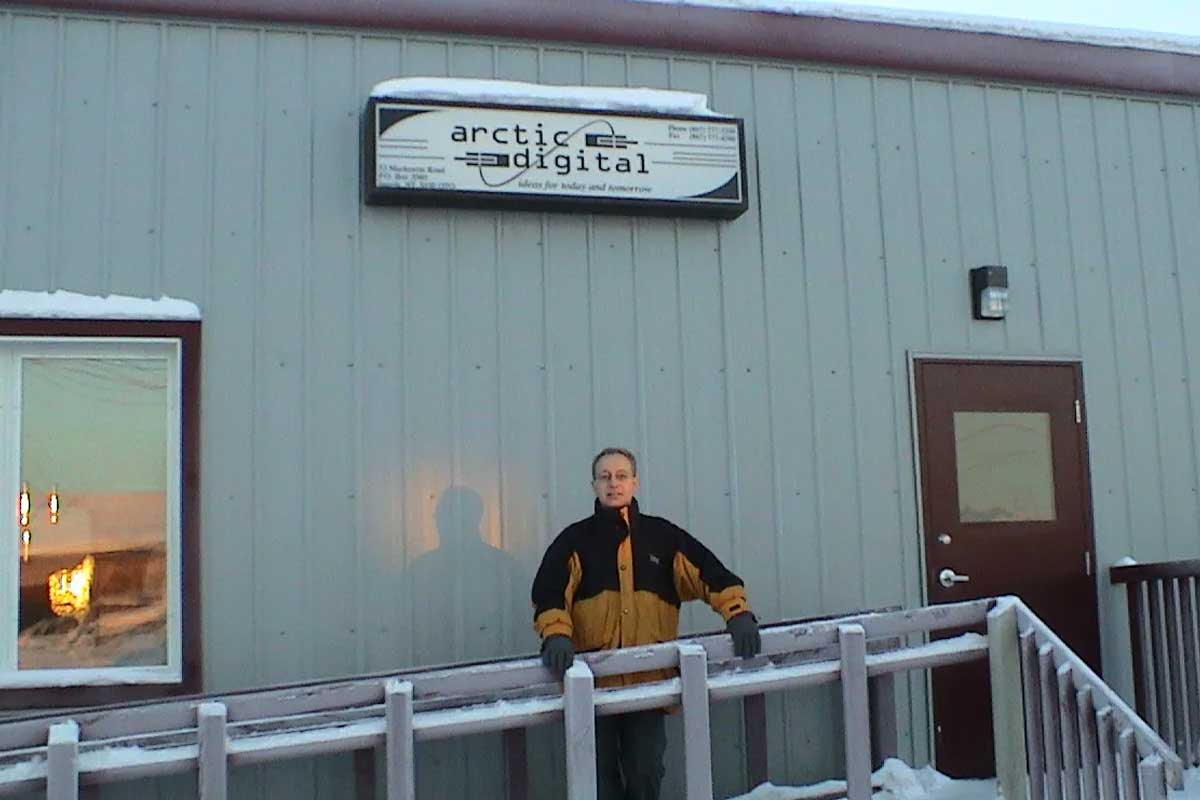
Bernie MacNeil has spent decades building Arctic Digital into a core part of Inuvik’s tech backbone—supplying equipment, supporting critical systems, and helping modern IT work reliably across the Beaufort Delta.
01 September 2025
Robert “Bob” Gully’s legacy is written into the Beaufort Delta’s day-to-day infrastructure: the Inuvik company he built from a 1979 welding shop into a no-frills, all-seasons operator that still keeps …
29 December 2025
Arctic Business is brought to you by the Western Arctic Business Association (WABA)—a member-led organization that supports business growth across the region through partnerships, practical programming, and advocacy on the conditions Northern enterprises need to succeed.