Big North Media - Website & Digital Media in Inuvik
25 December 2025
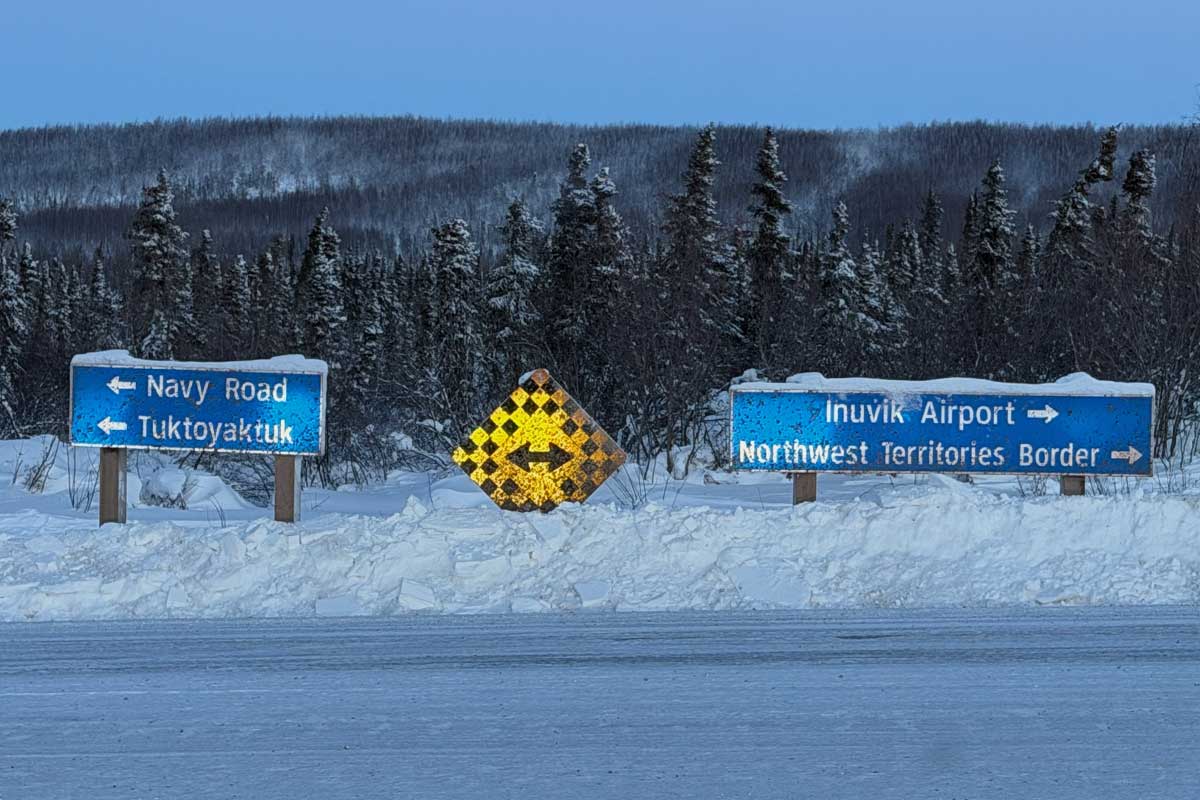
Directional road signs along the Inuvik–Tuktoyaktuk Highway in winter near Inuvik, Northwest Territories, Canada, guiding travel and transportation in Arctic conditions.
The Arctic economy has a practical constraint that rarely gets named because it doesn’t look like infrastructure: the difficulty of reliably finding and verifying Northern capacity in the moments that matter.
Call it the invisibility tax. It is the cumulative cost of a market where businesses, services, people, and opportunities are harder to discover, harder to confirm, and harder to compare than they should be. The result is not a single failure you can point to. It’s daily friction—small delays, extra calls, duplicated work, and uncertainty—that adds up across a region where timelines and margins are already tight.
The problem is not “marketing.” It’s not about having a nicer logo or posting more often. It is about the basic mechanics of a modern marketplace: discovery and trust signals.
In a functioning market, buyers can quickly answer three questions: Who is available? Are they legitimate? Are they appropriate for the need? In the Arctic, those answers are often slower and less certain than in southern Canada—not because Northern operators are less capable, but because the information environment is thinner, more fragmented, and more inconsistent.
At the local level, the invisibility tax shows up as basic uncertainty. Contact details change and don’t propagate. Businesses operate across multiple communities or seasons, but their service areas aren’t clearly represented. Names are similar, spelling varies, and listings are inconsistent. A supplier may be well-known locally yet nearly invisible to anyone who isn’t already in the loop. In small communities, relationships bridge some of this. But relationships do not scale, and they do not travel well across regions.
Tourism exposes the same weakness in a different way. Travellers search differently than locals. They use maps, aggregators, review sites, and booking platforms. If a Northern operator is missing, miscategorized, or hard to validate in those systems, it’s not a branding issue—it’s a discoverability failure. From the traveller’s perspective, what can’t be found doesn’t exist.
The employment market has a parallel issue. Jobs, training opportunities, and short-term contracts are increasingly discovered through search, social platforms, and aggregators. If postings aren’t indexed correctly or don’t appear in the channels people actually use, the market produces a false signal: employers perceive scarcity of applicants, and workers perceive scarcity of opportunity. This is not always a real mismatch of supply and demand. Sometimes it is a visibility mismatch.
As you move from local to regional, the problem becomes one of fragmentation. Arctic economies often operate across multiple institutions and systems—community organizations, regional development entities, municipal and territorial bodies, Indigenous governments, and private sector networks. Information about “who does what” exists, but it is scattered across websites, PDFs, social pages, old directories, and informal networks. Each source may be partially correct, partially outdated, or structured in a way that makes it hard to search. The result is duplication and uncertainty: multiple versions of truth, none of them complete.
At the national and international stage, the invisibility tax is amplified by the way digital discovery works now. Search engines and platforms prioritize structured data, frequent updates, standardized addresses, consistent naming, and continuous engagement. Those systems are optimized for dense markets where information is constantly refreshed and validated by volume—more links, more reviews, more transactions, more signals. In small, remote markets, those signals are naturally thinner. When the signal is thin, the ranking systems are less accurate and less forgiving. Visibility becomes volatile: a minor inconsistency can push a legitimate operator out of view, while a more optimized but less relevant listing rises.
This is why the invisibility tax is not simply about individual effort. It is a structural issue created by the interaction of Arctic reality—small markets, seasonal operations, multi-community service areas, variable connectivity, high administrative load—with global discovery systems that assume standardized, high-frequency data.
The consequence is a market that is harder to navigate than it needs to be. The cost is paid in time, uncertainty, and missed connections—buyers and suppliers who should find each other quickly, but don’t. Over time, that friction shapes how the Arctic economy feels to outsiders: fragmented, opaque, and harder to engage than it actually is.
The Arctic is not short on capable people and firms. It is short on a reliable, low-friction way for capability to be visible, legible, and verifiable at the speed modern decisions are made. That is the problem—and it is already expensive.
Western Arctic Business Association
06 January 2026
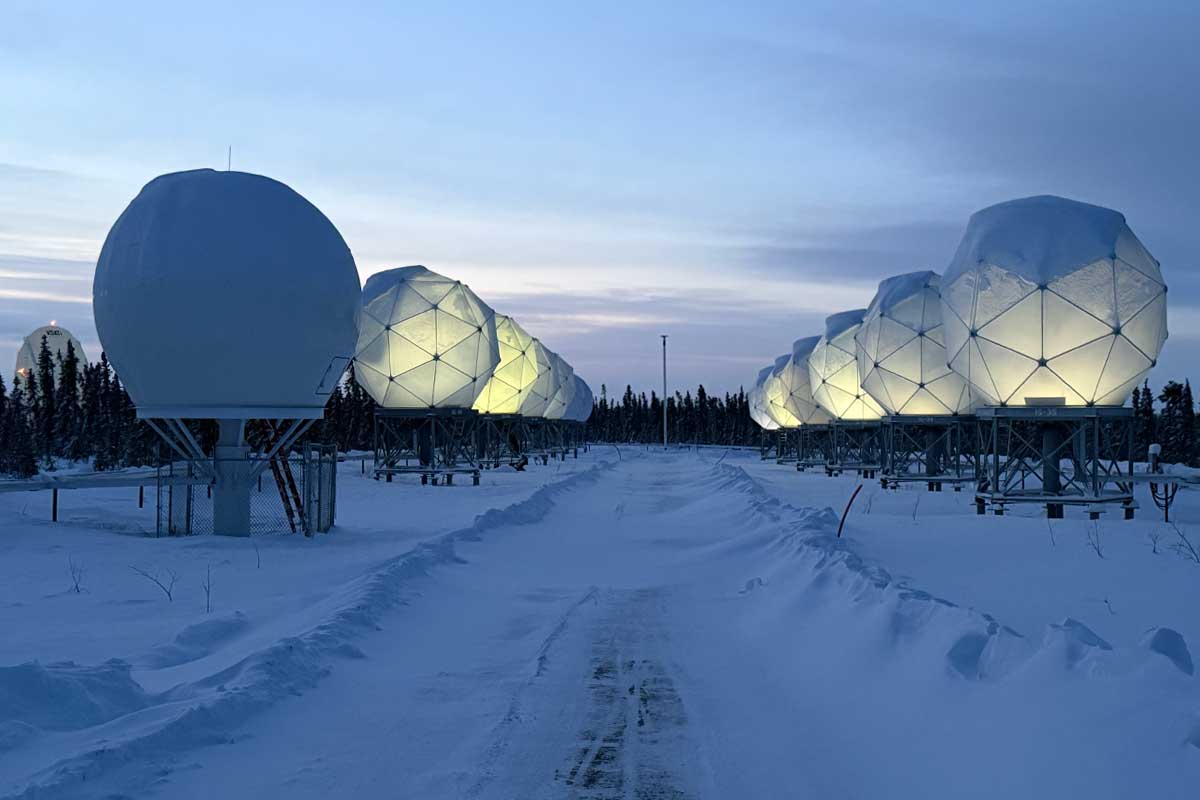
New North Space Park - Arctic Satellite Ground Station Hub in Inuvik
22 December 2025
Western Arctic Business Association
29 December 2025
Northern cloud providers aren’t a smaller version of southern platforms—they’re built around continuity, turnover, and community operating realities.
16 January 2026
From local fraud and service outages to state-driven targeting of infrastructure and resources, cyber risk in the Canadian Arctic is now a strategic and operational issue—not a back-office one.
28 December 2025
The space economy has moved from guarded capability to commercial infrastructure. Canada’s national interest now is to compete—and our rules haven’t caught up.
22 December 2025
Arctic Business is brought to you by the Western Arctic Business Association (WABA)—a member-led organization that supports business growth across the region through partnerships, practical programming, and advocacy on the conditions Northern enterprises need to succeed.