New North Space Park - Arctic Satellite Ground Station Hub in Inuvik
22 December 2025
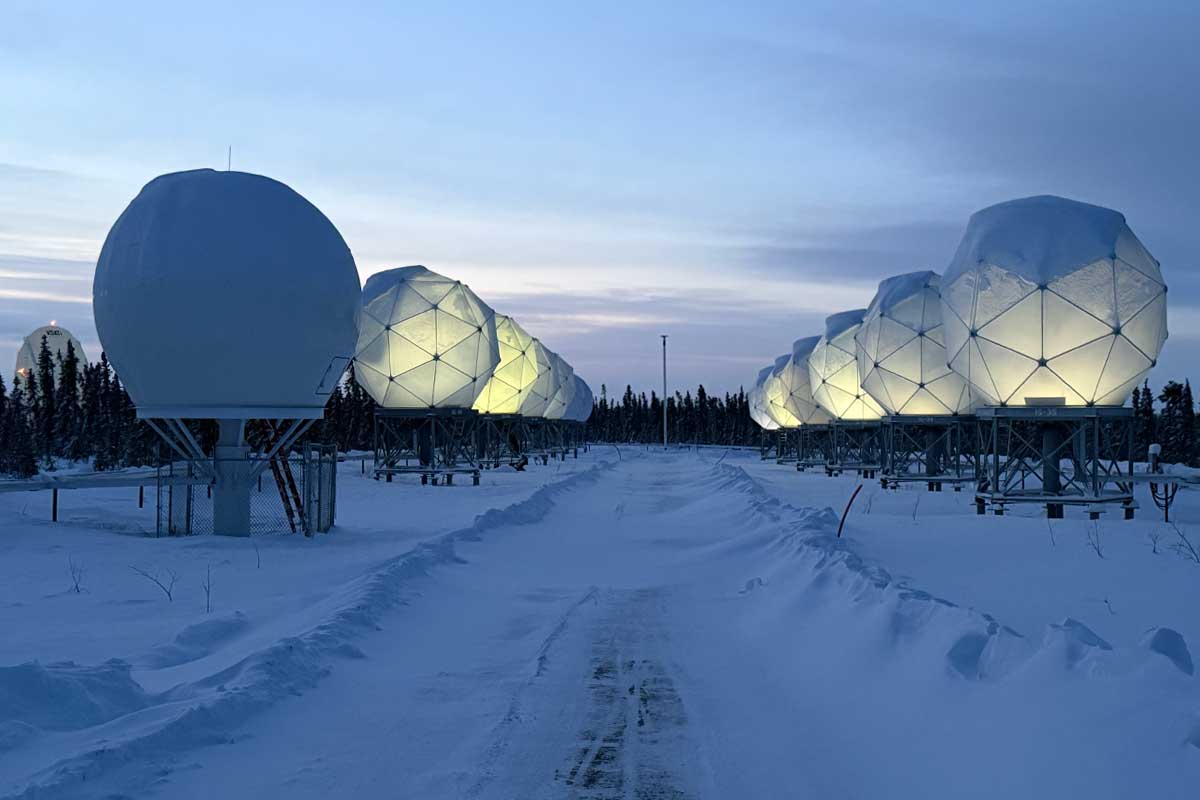
Radomes at a satellite ground station in Inuvik, Northwest Territories, Canada, supporting space communications and data services in the Western Arctic.
In the Western Arctic, you can plan for weather, freight, and staffing rotations. You can price in the cost of distance. What you can’t build a business around is open-ended delay.
That’s the quiet problem with Canada’s Remote Sensing Space Systems Act (RSSSA) as it applies to satellite ground stations: it doesn’t just regulate risk. It manufactures uncertainty—and commercial customers treat uncertainty as a reason to place their antennas somewhere else.
Tom Zubko, Founder of the New North Space Park, said the blunt part out loud in a letter dated July 24, 2025. He called the RSSSA a “substantial and unnecessary impediment” and argued it should be rescinded rather than rewritten. You don’t have to agree with every word to accept the core diagnosis: the law is built for a space sector that no longer exists.
Earth observation is no longer a scarce national capability held by a few governments. It’s an abundant commercial product. High-quality imagery can be sourced globally—from allies and private providers—at speeds customers now expect as normal. When Canadian approvals slow a downlink, it rarely prevents the data from existing. It simply changes where the data lands.
That’s not a security win. It’s a competitiveness loss.
Inuvik matters because it’s not a symbolic location. It is one of the best places in the North American Arctic for ground stations: real logistics, real connectivity, and a workforce that can build and maintain serious infrastructure. The North can host global systems. The problem is Canada can’t reliably host global timelines.
The market is already responding. Zubko describes clients installing dozens of dishes worldwide while barely touching Inuvik, and others planning Arctic sites outside Canada specifically to avoid RSSSA friction. Those aren’t political statements. They’re capital allocation decisions. Once operators standardize their network elsewhere—vendors, designs, licensing playbooks—they don’t circle back quickly.
Industry research summarized alongside the letter points in the same direction: a Canadian space sector generating about $5 billion in 2023, reportedly down from 2014; productivity materially lower than the U.S.; and a 2022 independent review of the RSSSA in which 43% of respondents said the Act’s costs and complications were “significant” or “prohibitive,” concluding it inhibits technological development and makes Canada a less desirable place to grow space businesses. That is exactly how “we take security seriously” becomes “we can’t operate on your timeline.”
Then there’s the governance drag that erodes confidence even faster than paperwork. Sources describe an “Inuvik limbo” where a federal operator in Inuvik is consulted as a stakeholder when private competitors seek approvals. Even if everyone involved acts responsibly, it invites the perception of conflicted oversight. In global markets, perception is enough. Companies can—and do—route around jurisdictions that feel slow, unclear, or structurally unfair.
This is where “down south” often misreads the North. Remoteness is a known cost you can design around. What breaks projects is unreliable time. In the Arctic, delay can mean missing a build season, demobilizing crews, re-shipping materials, and pushing revenue into the next year. Uncertainty doesn’t just slow projects—it cancels them.
Canada doesn’t need to choose between security and growth. It needs to choose tools that fit reality—and define national interest accordingly. Allies are already adapting. The United States liberalized key remote sensing rules in 2020 with an explicit emphasis on supporting domestic industry, acknowledging that blunt restrictions don’t meaningfully control globally available data. The predictable result of Canada’s slower approach is “regulation shopping”: firms license and build where approvals are faster and clearer.
So what should change isn’t the messaging. It’s the premise.
In the space economy, the data will downlink somewhere. The question is whether Canada hosts that value chain—or keeps exporting it through delay and ambiguity.
If Ottawa wants compliance and investment, the test is simple: the rules have to be understandable to the people expected to follow them, and they have to clearly advance Canada’s interests. When a framework can’t explain—plainly, predictably, and on a commercial timeline—what it protects, how it protects it, and why it can’t be achieved with narrower tools, it stops functioning as security policy. It becomes self-inflicted disadvantage.
Canada doesn’t need a better version of confusion. It needs a regime that matches the world we’re in—and lets Inuvik compete.
Big North Media - Website & Digital Media in Inuvik
25 December 2025
Western Arctic Business Association
16 December 2025
Northern cloud providers aren’t a smaller version of southern platforms—they’re built around continuity, turnover, and community operating realities.
16 January 2026
In the Arctic, the limiting factor is often not capability—it’s discoverability and verification, and that friction quietly distorts how the region functions.
25 December 2025
From local fraud and service outages to state-driven targeting of infrastructure and resources, cyber risk in the Canadian Arctic is now a strategic and operational issue—not a back-office one.
28 December 2025
Arctic Business is brought to you by the Western Arctic Business Association (WABA)—a member-led organization that supports business growth across the region through partnerships, practical programming, and advocacy on the conditions Northern enterprises need to succeed.